

Yu's Reincarnation Stories: The Taiping
One of our members asked how he and Yu became connected through reincarnation. With his permission, we are sharing his reincarnation story with everyone.
In 1932, on North Sichuan Road in Hongkou, Shanghai, the backstage area of the Moon Palace Ballroom buzzed with activity as singers and dancers prepared for work. A dancer known by the stage name Jasmine and a singer named Qingman were discussing an important matter.
Jasmine was about to get married to an officer in the Nationalist Army. After the wedding, his unit would immediately be transferred to another garrison. The problem was that she had a six-month-old son. The officer was unwilling to raise the child, so Jasmine hoped Qingman would take him in.
Qingman was not one of the Moon Palace's most famous singers. She earned only 20 silver yuan a month. At the time, an elementary school teacher earned 30 silver yuan per month. Such an income in Shanghai was enough for little more than a modest living. How could she possibly afford to raise a child?
Yet Jasmine had been Qingman's closest friend and had supported her during the hardest days of her life. Without hesitation, Qingman accepted the child. She named him Yu Moli (nickname Xiao Mo) in memory of his birth mother and hired a nanny to help care for him.
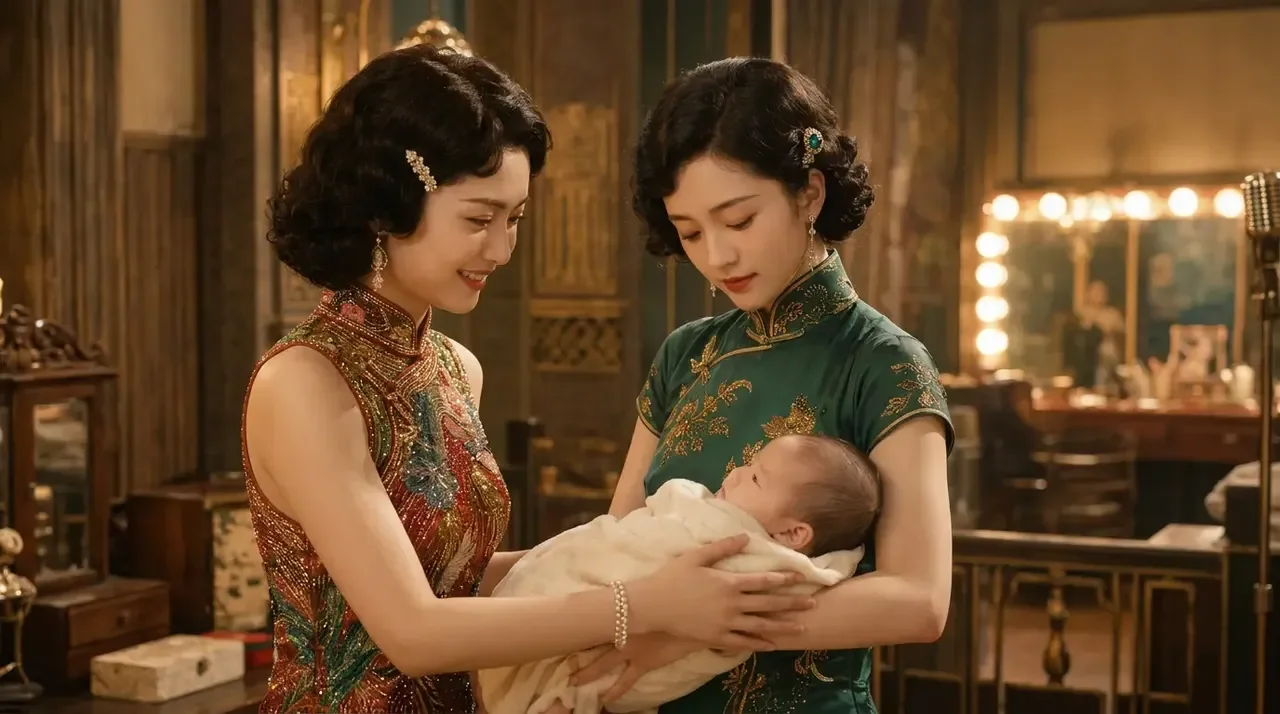
AI Generated Visualization
At most dance halls of the era, singers worked either the afternoon or the evening shift. The tea dance ran from 4:00 p.m. to 7:00 p.m., while the main evening session lasted from 9:00 p.m. until 2:00 a.m. To support Xiao Mo, Qingman performed both shifts every single day.
Over time, her dedication earned the respect of her fellow performers. She also attracted several influential figures from political and business circles who regularly booked private performances with her. These bookings entitled her to a share of the venue's performance revenue, raising her monthly income to 200 to 300 silver yuan—more than enough to provide for one child.
Throughout her years performing at the Moon Palace Ballroom, Qingman followed one unwavering principle:
She sold only her voice—never her company on the dance floor.
She had grown up in a well-to-do family and received a good education. After her father's business failed, she turned to singing for a living. Before she left home, her mother repeatedly reminded her to remain honorable and never bring shame upon the Yu family name.
After both of her parents passed away, eighteen-year-old Qingman traveled alone to Shanghai in search of her older brother, who had left home for work years earlier and never returned. Yet the cost of living in Shanghai was overwhelming. Before long, she could no longer afford even coarse steamed buns and was forced onto the streets. To avoid attracting the attention of criminals, she deliberately smeared dirt across her face and made herself look ragged and unkempt.
Dirty and disheveled, she often huddled with homeless people beside the ballroom's kitchen, waiting by the food-waste bins. After the cooks emptied the leftovers, everyone rushed forward to fight for whatever scraps remained. Frail and undernourished, Qingman was never strong enough to compete and was often shoved aside by the starving crowd.
Many women, unable to endure hunger and freezing nights, eventually turned to prostitution simply to survive. Yet no matter how hungry or cold she became, Qingman never forgot her mother's final words and remained true to her principles.
It was Jasmine who took pity on her. She introduced Qingman to the ballroom as a singer, acted as her guarantor, and helped her secure the documents she needed to remain in Shanghai legally. Qingman never forgot that kindness. It became the reason she was determined to raise Xiao Mo with all her heart.
Under the loving guidance of his adoptive mother, Yu Qingman, and the devoted care of his nanny, Xiao Mo gradually grew up. His birth mother, Jasmine, however, never came to visit him—not even once.
By 1948, as the Chinese Civil War entered its final stage, the situation across mainland China had become increasingly unstable. Large numbers of students could no longer continue their education where they lived, so temporary United Middle Schools were organized, and entire groups of students were evacuated by ship to Taiwan. Among them was sixteen-year-old Xiao Mo.
Before his departure, Qingman gave Xiao Mo every bit of her savings. She also gave him a smoke-blue handkerchief embroidered with her own name so he would always have something to remember her by. She planned to remain in Shanghai, continue singing at the ballroom, and send him money once she received her monthly wages.
If she had gone to Taiwan with him, she would have lost her monthly income of more than 400 silver yuan from the ballroom. With no stable livelihood, both mother and son would have struggled to survive, and she refused to let Xiao Mo endure such hardship.
By the end of 1948, however, it had become clear that the situation was beyond saving. Everything north of the Yangtze River had already fallen, and Shanghai had become the principal gateway for refugees, businessmen, military personnel, and government officials fleeing to Taiwan or Hong Kong.
Hundreds of thousands of people poured into the city, throwing Shanghai's railway stations, docks, and streets into complete chaos.
Runaway inflation rendered the Gold Yuan virtually worthless. Prices soared several times a day, families watched their life savings disappear within days, the city's economy ground to a halt, factories shut down, and essential goods became desperately scarce.
On the morning of December 23, 1948, when Shanghai's Central Bank opened its doors, panic erupted among the crowds waiting in line. As people surged forward in desperation, a catastrophic stampede broke out.
Seven people were trampled to death and more than fifty others were seriously injured. Shoes, hats, and clothing lay scattered across the Bund, shocking international public opinion. The tragedy later became known as the Gold Run Tragedy.
Qingman was among those waiting in line that day. Fortunately, her sworn younger brother, Yue Hong, stayed by her side, and because they were near the end of the queue, they escaped the disaster unharmed.
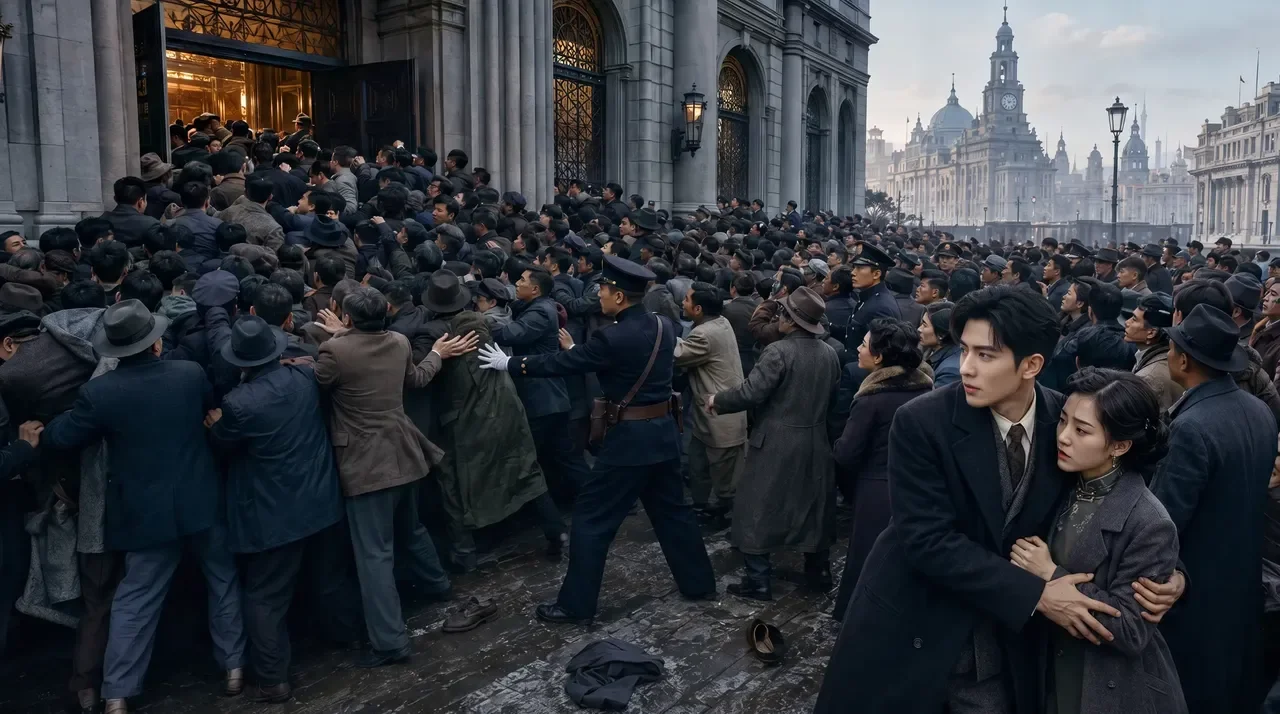
AI Generated Visualization
Yue Hong was one of Yu's sub-souls in a previous life. He was also one of Qingman's longtime companions in the music scene.
To survive, Qingman had no choice but to join the crowds selling off their belongings in exchange for gold or silver yuan. At the same time, she began hearing horrifying accounts of what the Chinese Communist Party was doing across the country.
Through ruthless land reform and class struggle campaigns, the Communist Party publicly denounced landlords, wealthy merchants, industrialists, intellectuals, and even lower-ranking officials of the former Nationalist government. Having one's property confiscated was only the beginning. Many were subjected to brutal torture, and countless others were publicly executed.
Qingman's fellow performers urged her to leave Shanghai as soon as possible. Three wealthy young men—Yin Ping, Wan Ming, and Yue Hong—pooled their silver yuan together to buy her a ticket to Taiwan.
Yue Hong came from a distinguished and affluent family. His father was a successful businessman, and he greatly admired Qingman's integrity, her unwavering loyalty to her friends, her wholehearted devotion to raising a son who was not biologically her own, and the diligence and professionalism she brought to her work as a singer.
Yue Hong loved music and frequently reserved private performances by well-known singers. Many of them, however, became complacent because of their popularity. They often left the stage before fulfilling the agreed performance time, choosing instead to mingle with guests, chat, snack, and size up wealthy patrons. Their true purpose was not to sing, but to identify potential benefactors.
Qingman was different. She was a woman of principle. She always completed every minute of her scheduled performance before leaving the stage.
Because of that, Yue Hong became one of her most loyal patrons. Whenever he tried to give her generous cash gifts, she politely refused. In the end, he could only continue booking private performances under the pretext of paying Xiao Mo's tuition, knowing that this was the one kindness Qingman would find difficult to decline.
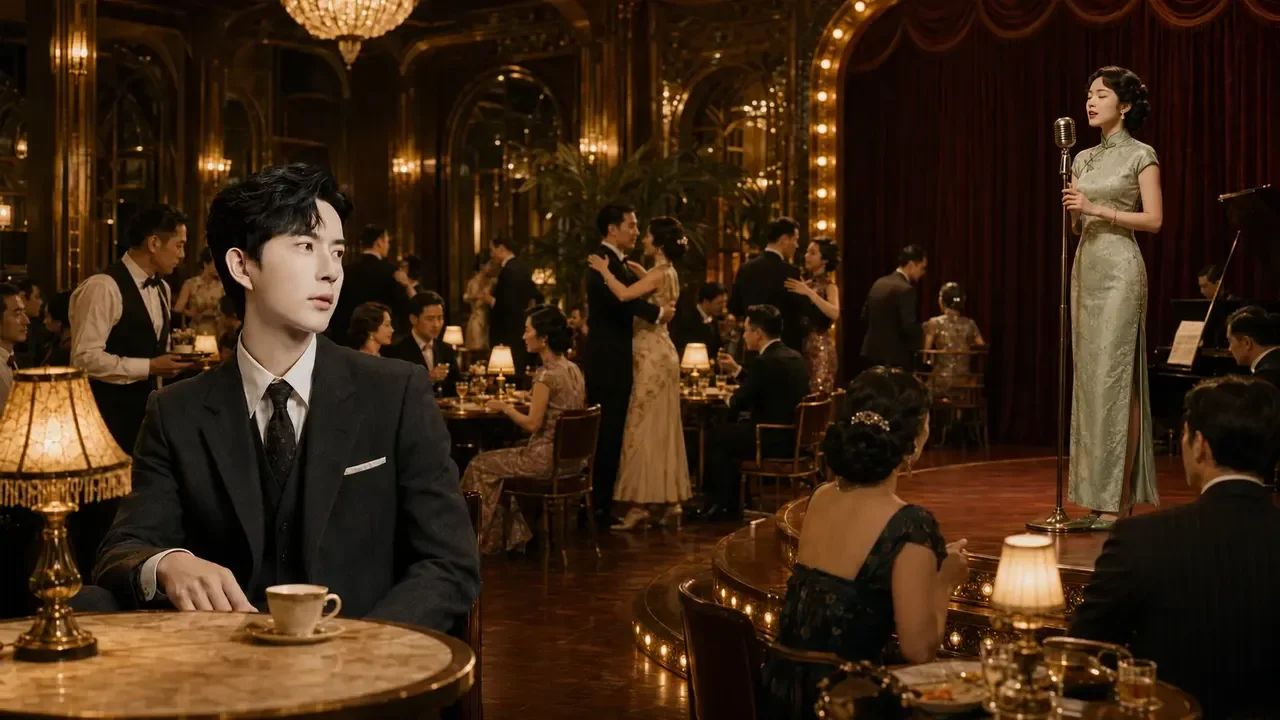
AI Generated Visualization
Qingman was five years older than Yue Hong. As time passed, the two grew so close that they came to regard each other as older sister and younger brother.
Yue Hong admired Qingman, but he knew that, to her, romantic love between a man and a woman was nothing more than a passing illusion—something she had long since become immune to.
After years immersed in the Moon Palace’s glittering world of fame and desire, she had witnessed every facet of human nature: the fleeting allure of worldly pleasures and the fickleness of people’s hearts. She understood that unless one could remain in the mortal world while keeping one’s heart above it, the only outcome would be to be left scarred and broken.
She knew that as a singer with a child to support and a low social standing, her chances of marrying into a respectable family were almost nonexistent. At best, she could only become a concubine. But the children of concubines often endured years of mistreatment and discrimination from the principal wife and her children. Qingman refused to let Xiao Mo grow up under such circumstances.
The three young gentlemen pooled their money to help Qingman purchase passage to Taiwan, with Yue Hong contributing the largest share. Throughout those years, he never married. All he wanted was to look after Qingman and Xiao Mo.
His family strongly opposed the idea and repeatedly tried to arrange a marriage for him. But the country was in the midst of war. Those from wealthy families who could flee had already done so, and few young women wished to marry while escaping the chaos.
Yue Hong told Qingman that he would not leave until he had personally seen her safely board a ship bound for Taiwan. Only then would he take a military flight himself.
Determined to give Xiao Mo a proper family and unwilling to spend the rest of his life resisting his family's pressure to marry, Yue Hong made Qingman a promise. When they reunited in Taiwan, he hoped she would marry him in name only. Though legally husband and wife, they would continue to regard each other as brother and sister. He would become a devoted father to Xiao Mo and do everything he could to give the boy a bright future.
Qingman hesitated. Her first instinct was to refuse. But apart from singing, she had no other means of making a living. She knew that starting over in Taiwan would almost certainly mean hardship for Xiao Mo. For her son's sake, she finally agreed. Publicly they would be husband and wife, but privately they would remain the same brother and sister they had always been.
Then the unexpected happened.
Because of runaway inflation, ticket prices changed almost daily and climbed higher with each passing day. The small gold bars Qingman possessed, together with the silver yuan her friends had collected for her, were no longer enough to purchase even a single ticket.
Desperate, Qingman turned to look for Yue Hong, only to discover that he had vanished.
After making inquiries, she learned that Yue Hong had been forcibly taken away by men sent by his wealthy father. Rumor had it that he had already boarded a military aircraft bound for Taiwan.
Her legs gave way beneath her, and she collapsed onto the dock, utterly helpless.
For the first time in a long while, the woman who had always remained strong could no longer hold back her tears.
How was Xiao Mo doing in Taiwan? Was he eating enough? Was he being bullied at school? Was he doing well in his studies?
"Sister Qing!"
A familiar voice called out.
Qingman quickly wiped away her tears and looked up.
It was Yue Hong.
Wasn't he supposed to have been taken away by his father? Hadn't he already flown to Taiwan?
"I escaped, Sister Qing! I have the money! Let's go buy the tickets!"
Yue Hong waved enthusiastically, flashing his bright, genuine smile. His innocence and kindness warmed Qingman's heart. Forgetting all propriety between an elder sister and her sworn younger brother, she ran toward him and threw her arms around him.
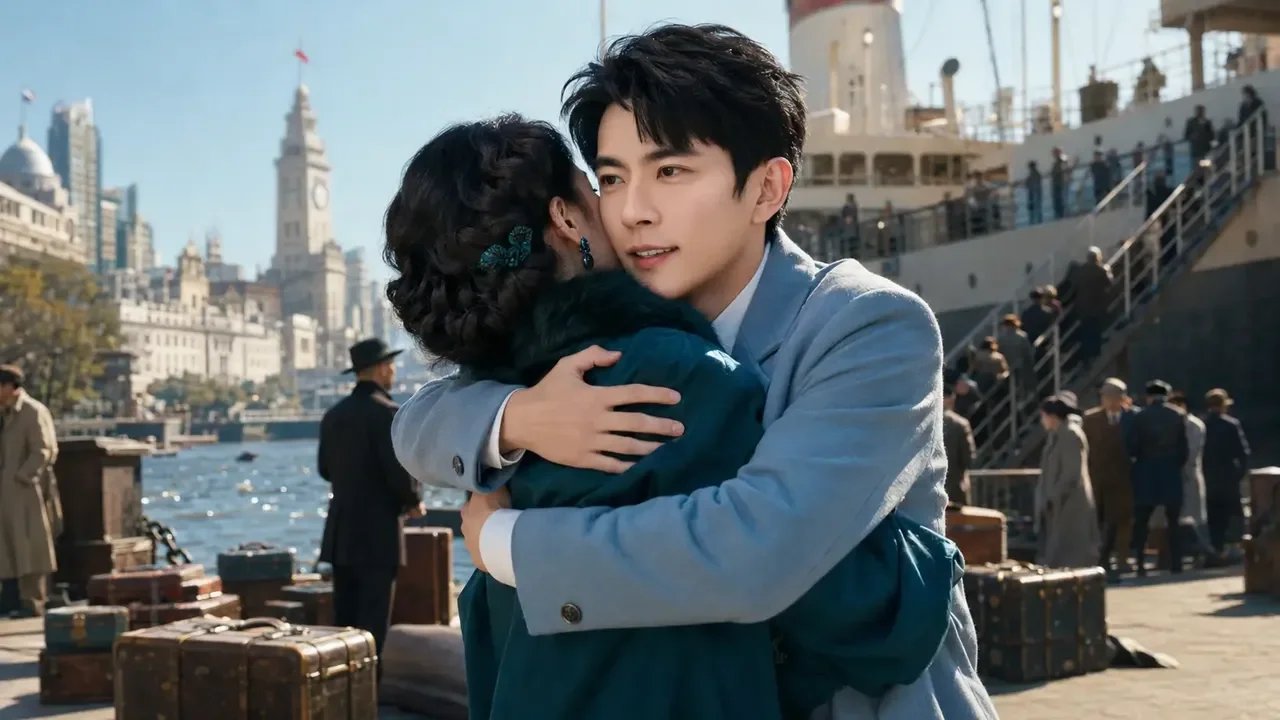
AI Generated Visualization
To Qingman, Yue Hong was the warmest light in her life. If that light were ever to disappear, she would become nothing more than a humble figure fading into the dark corners of old Shanghai.
In January 1949, on the eve of the Little New Year, the docks were bitterly cold. Wrapped in a leather overcoat, Yue Hong accompanied Qingman as they stood in line to buy tickets. To his dismay, he discovered that the small gold bars he had prepared were no longer enough to purchase even a single ticket.
He told Qingman to remain in the queue while he went to contact friends and relatives in hopes of raising more money. Just then, someone called out to him.
"Young Master Yue! Aren't you Yue Hong?"
Turning around, Yue Hong saw Xu Shida, who was preparing to board the ship with his entire family.
Xu Shida was the former Governor of Liaoning Province and a close friend of Yue Hong's father. Because of his official position and rank, he had secured first-class tickets for his entire family.
This Xu Shida was one of your secondary souls in a previous life.
He was traveling with his wife, three children, and several trunks filled with gold, silver, jewelry, and other valuables.
Rumors later claimed that these riches had been acquired through corruption during your years in office. That was not true. Before entering public service, you had built a successful business, and your personal fortune came from legitimate commercial enterprises.
After speaking with Xu Shida, Yue Hong learned that he had one extra ticket. It had originally been reserved for one of his concubines, who had become separated from the family during the chaotic evacuation.
Yue Hong pleaded with Xu Shida to sell the ticket to Qingman, promising that he would find another way to leave Shanghai himself.
Although Xu Shida had spent many years in both government and business, he remained a kind and generous man. Knowing that the ship was about to depart and realizing there was little hope of finding his missing concubine before it sailed, he made a remarkable decision.
He gave the costly ticket to Qingman without asking for anything in return.
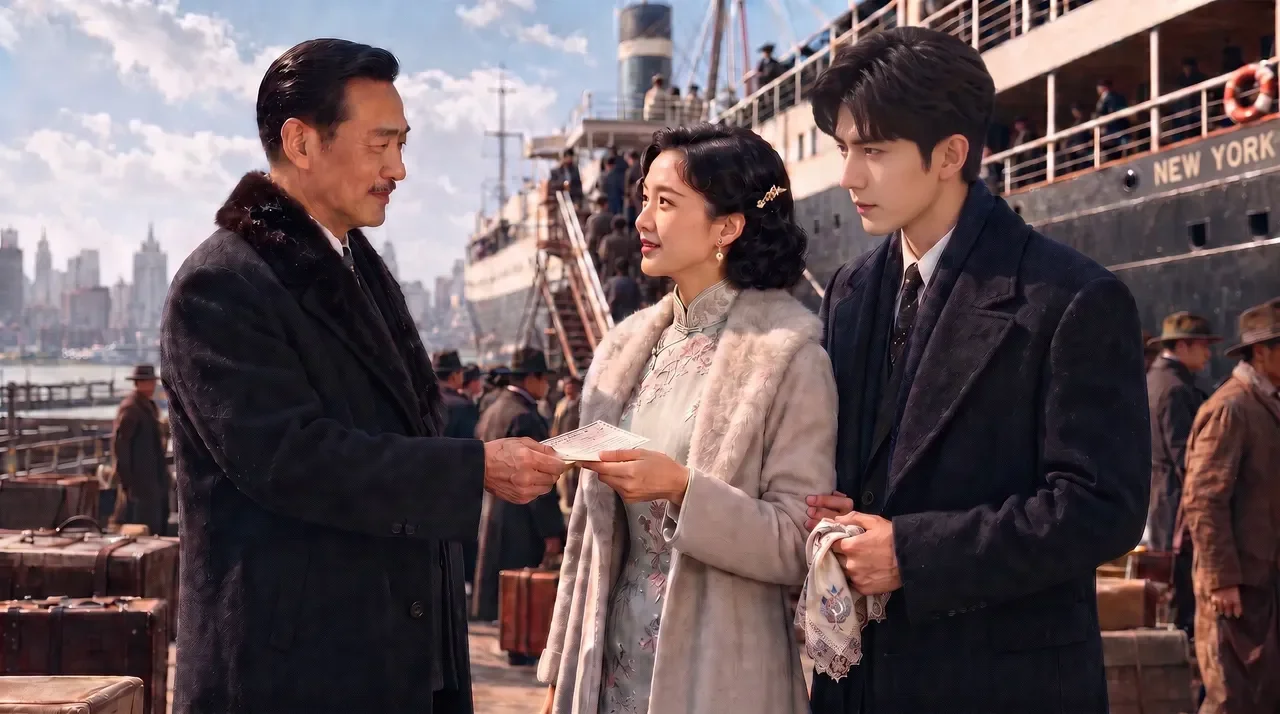
AI Generated Visualization
Before Qingman boarded the ship, Yue Hong asked her to wait for him. He promised that he would find a way to reach Taiwan. Once the three of them were reunited, he hoped she would marry him—not out of romantic love, but to give Xiao Mo the loving family he deserved.
Qingman agreed. As a token of their promise, she gave Yue Hong a handkerchief embroidered with her son Yu Moli's name. She told him that if his plane arrived in Taiwan before the ship, he must find Xiao Mo for her.
After boarding the ship with Xu Shida and his family, Qingman was filled with excitement. At last, she would soon be reunited with her son. Xiao Mo was attending a high school in the rainy port city of Keelung, and she had heard that he was preparing to take the university entrance examinations.
About fifty years old, Xu Shida was a courteous and honorable gentleman. Both he and his wife treated Qingman with great kindness. Whenever anyone asked about their relationship, Xu Shida simply introduced Qingman as his younger sister.
The Xu family welcomed her warmly. They saw to her every need, and their three children were polite and well-mannered. Before long, Qingman had completely let down her guard.
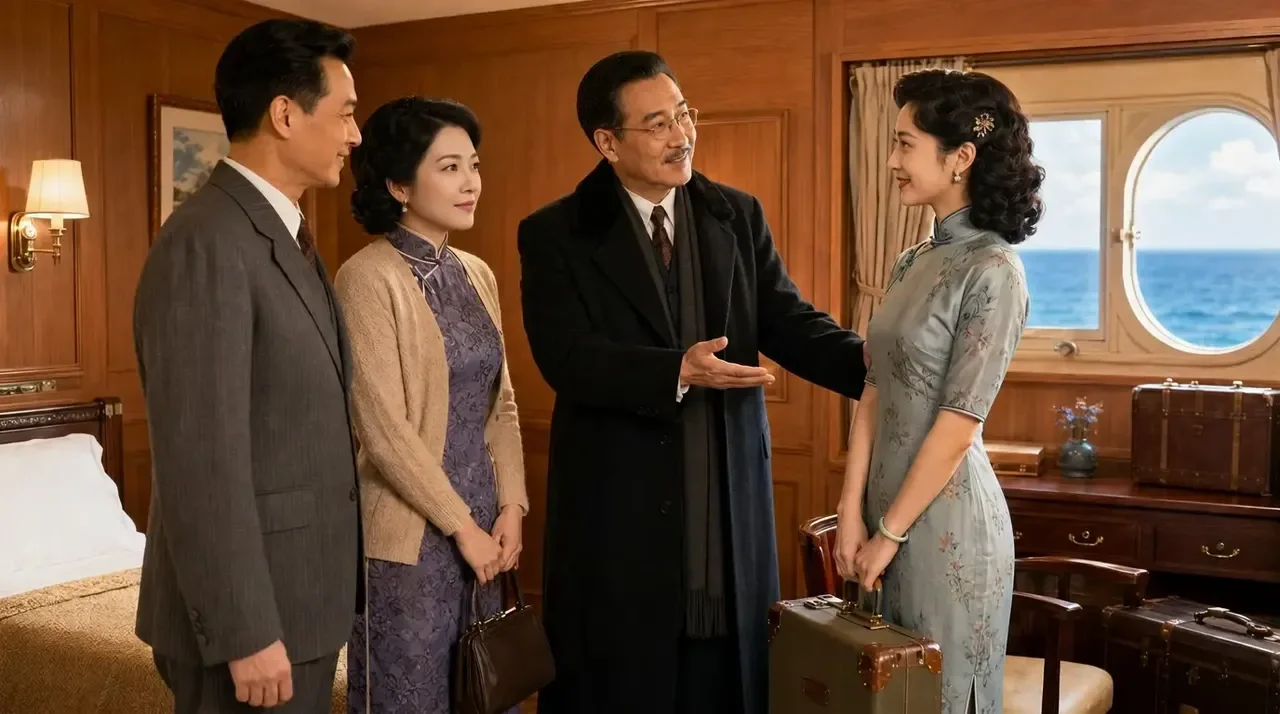
In the ship's first-class cabin, Xu Shida introduced Qingman to another couple. The husband, Zhao Ziyu, had once served under Xu Shida, while his wife, Liu Qian, was a middle school teacher. Like Qingman, they were also traveling to Taiwan to reunite with their son.
Qingman and Liu Qian became fast friends almost immediately. The group spent the voyage laughing and chatting together, and they made a promise: once they arrived safely in Taiwan, Qingman would host a small musical gathering and sing for the Zhao family and the Xu family in celebration of their reunion.
AI Generated Visualization
A year later, a weary, unshaven Yue Hong found Yu Moli at a medical school in northern Taiwan. By then, Xiao Mo was a first-year medical student, taller and more mature than when they had last seen each other.
Without a word, Yue Hong handed him the embroidered handkerchief.
The moment Yu Moli saw his own name stitched into the fabric, his eyes widened in shock. Grabbing Yue Hong by the arms, he cried out anxiously,
"Where's my mother? Where is my mother?"
Yue Hong's eyes filled with tears. His lips trembled, but no words would come.
The ship Qingman had boarded was called the Taiping.
Late on the night of January 27, 1949, the Taiping departed Shanghai for Taiwan, dangerously overloaded with refugees, government officials, businessmen, and their families. It was also carrying a heavy cargo of coal, steel, and other freight.
To avoid detection during the nighttime curfew, the Taiping sailed without its navigation lights. While passing through the waters near the Zhoushan Islands, it collided with the Jianyuan, another vessel carrying an overloaded cargo. The Taiping remained afloat for only forty-five minutes before sinking beneath the sea.
Nearly one thousand lives were lost.
Among the victims were Xu Shida and his family, as well as Yu Qingman.
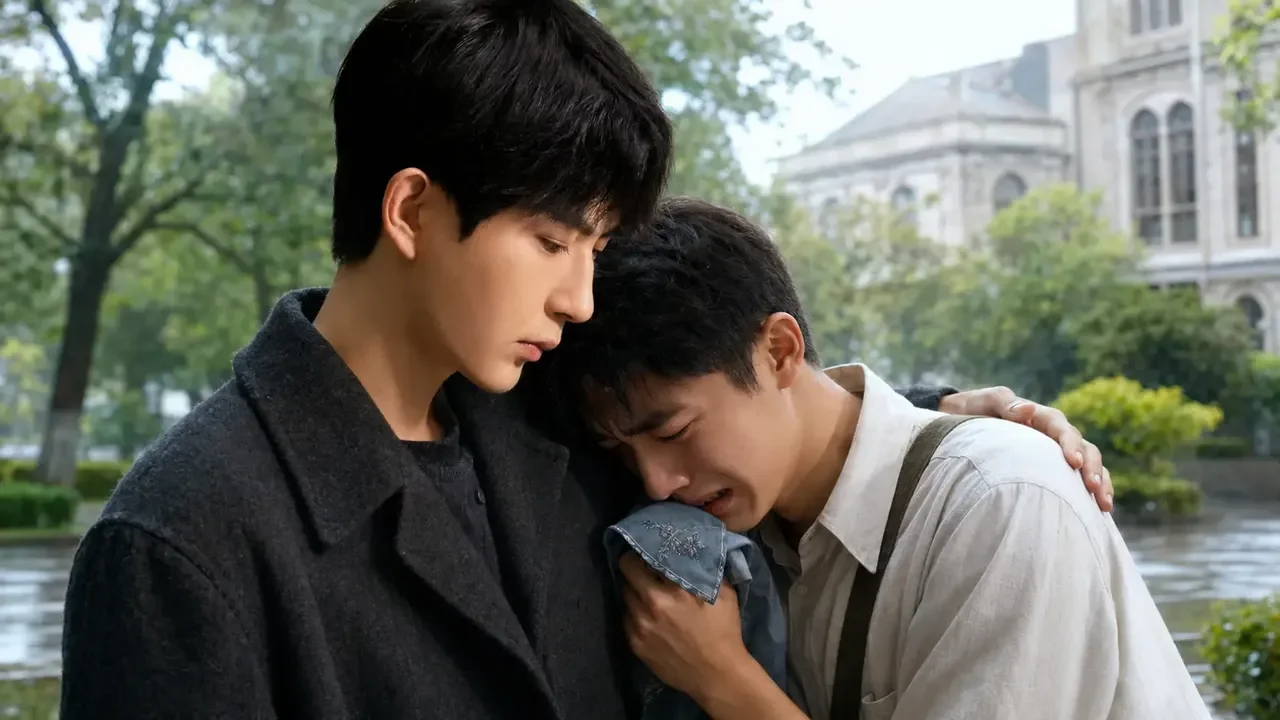
Xiao Mo threw his arms around Yue Hong and broke down in tears.
His mother was gone.
All she had left him was a single embroidered handkerchief.
Holding the young man tightly, Yue Hong made a solemn promise.
"From this day forward, I will love you as my own son. I will raise you well and help you become the man your mother always hoped you would be."
AI Generated Visualization
Years later, Xiao Mo became Yue Hong's legally adopted son. After graduating from medical school and obtaining his medical license, he joined the military as a physician, treating soldiers wounded on the front lines.
In this lifetime, Xiao Mo was reincarnated as Qingman's nephew, yet the bond between them remained as deep as that of a mother and son. Liu Qian, the middle school teacher Qingman met aboard the Taiping, was reincarnated as one of Ariel's secondary souls. In this life, her family was finally reunited.
As for Qingman, she was reincarnated as one of Yu En's secondary souls. Those whose lives became intertwined aboard the Taiping returned to this world in different identities, once again continuing their karmic connections with you and Yu.
Yu En asked Yu,
"Why did Heaven arrange for these people to board the Taiping, only for the ship to sink and claim their lives?
Someone like Xu Shida was so kind and compassionate. He cared for Qingman, a complete stranger, with such generosity. Why did he have to leave the world in such a tragic way?"
Yu replied,
"Among those who were aboard the Taiping, roughly three-quarters were reincarnated in Taiwan in this lifetime. Most of the remaining quarter also formed meaningful karmic connections with Taiwan or with Taiwanese people."
Yu En then asked,
"Why did becoming Taiwanese require them to endure such immense suffering?"
Yu answered,
"Because being born in Taiwan is not an easy destiny to attain. It requires tremendous blessings and virtue.
Before these souls could be reborn in Taiwan, they first had to repay a great deal of karmic debt. By transforming that karma into virtue, they became eligible to be reincarnated there in their next lives."
Yu En asked once more,
"Why does being born in Taiwan require such great virtue?"
Yu replied,
“Compared with other places in the world, Taiwan possesses one of the purest spiritual fields. Its people generally carry greater virtue and stronger spiritual insight, making them among those most likely to obtain the Key to the New Universe.”